 how-to
How to Keep Berries Fresh Longer: A 2026 Guide
Table of Contents
- Why Berries Go Bad So Fast (And What Actually Stops It)
- Should You Wash Berries Before Storing Them?
- Vinegar Wash for Berries: Does It Actually Work?
- How to Keep Berries Fresh in the Refrigerator
- How Long Do Strawberries Last in the Fridge (And Other Berries)?
- Best Berry Storage Containers: Airtight vs. Breathable
- Freezing vs. Refrigerating: Which Is Better for Your Berries?
- How to Keep Berries Fresh Longer: Common Mistakes to Avoid
- Frequently Asked Questions
Last Updated: August 31, 2026
Why Berries Go Bad So Fast (And What Actually Stops It)
Berries are among the most perishable produce you can buy. Understanding why they deteriorate quickly is the first step toward keeping them fresh for days longer. This guide covers every storage method worth knowing, from vinegar washes to freezing.
Moisture and Mold Spores: The Real Culprits
Berries arrive from the store carrying invisible mold spores on their skin. Moisture activates these spores, and a single damp berry creates the humidity that spreads mold to every berry touching it within 24 to 48 hours. Moisture control is the foundational principle behind every effective storage method. Condensation inside sealed containers, water from rinsing, and refrigerator humidity all accelerate spoilage dramatically.
How Berry Origin and Ripeness at Purchase Affect Shelf Life
Berries picked at peak ripeness and sold locally have a shorter window than berries picked underripe for long-distance shipping. A berry that traveled 1,500 miles has already been in cold storage and may have less time left than a locally picked berry. Buy berries you plan to eat within two days at peak ripeness, and buy slightly firmer berries if you need them to last a week. Check for crushed or soft berries before purchasing.
Should You Wash Berries Before Storing Them?
Don't wash berries until you're ready to eat them. Water introduces surface moisture that traps in the berry's skin, creating conditions mold spores need to activate. Even thorough drying leaves residual moisture in strawberry seed crevices and hollow centers of raspberries and blackberries, accelerating bacterial growth.
The exception is the vinegar wash method, which works because you dry berries completely afterward. Half-measures like a quick rinse and paper towel pat are worse than no washing at all.
Vinegar Wash for Berries: Does It Actually Work?
The vinegar wash genuinely works. The acidity in diluted white vinegar kills mold spores and bacteria on the berry's surface before they spread. Done correctly, it can extend shelf life noticeably compared to unwashed, refrigerated berries.
According to food safety guidance from the USDA, reducing microbial load at the point of storage is an effective preservation strategy.
Step-by-Step Vinegar Soak Method
This process takes about 20 minutes and works for strawberries, blueberries, blackberries, and raspberries.
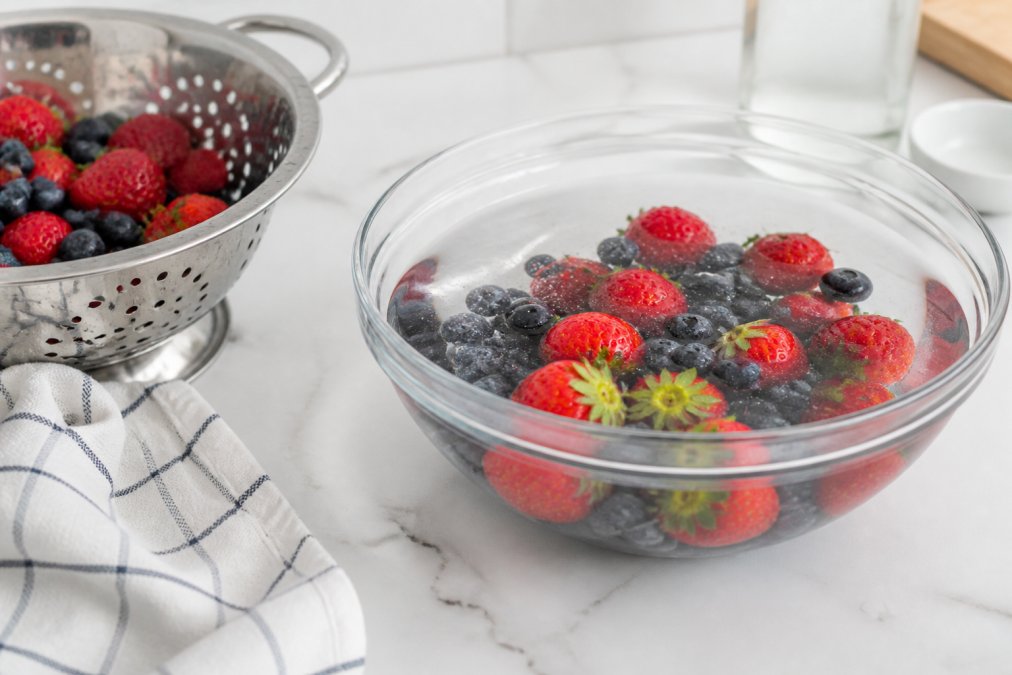
- Mix one part white vinegar with three parts cold water in a large bowl.
- Add berries and submerge gently without crowding.
- Soak for 5 to 10 minutes.
- Drain into a colander and rinse thoroughly with cold water.
- Spread berries in a single layer on a clean kitchen towel or paper towels.
- Allow to air dry completely, at least 30 minutes. This step is non-negotiable.
- Transfer to a dry storage container lined with paper towels and refrigerate.
The drying step matters more than the vinegar. Berries stored even slightly damp will still mold quickly.
Hydrogen Peroxide as an Alternative
Hydrogen peroxide at 3% concentration works similarly to vinegar as a surface sanitizer. Mix one tablespoon into two cups of cold water, soak for two minutes, then rinse and dry completely. The process is faster and leaves no residual flavor. As noted in produce safety resources from the FDA, proper rinsing after any sanitizing treatment is essential.
How to Keep Berries Fresh in the Refrigerator
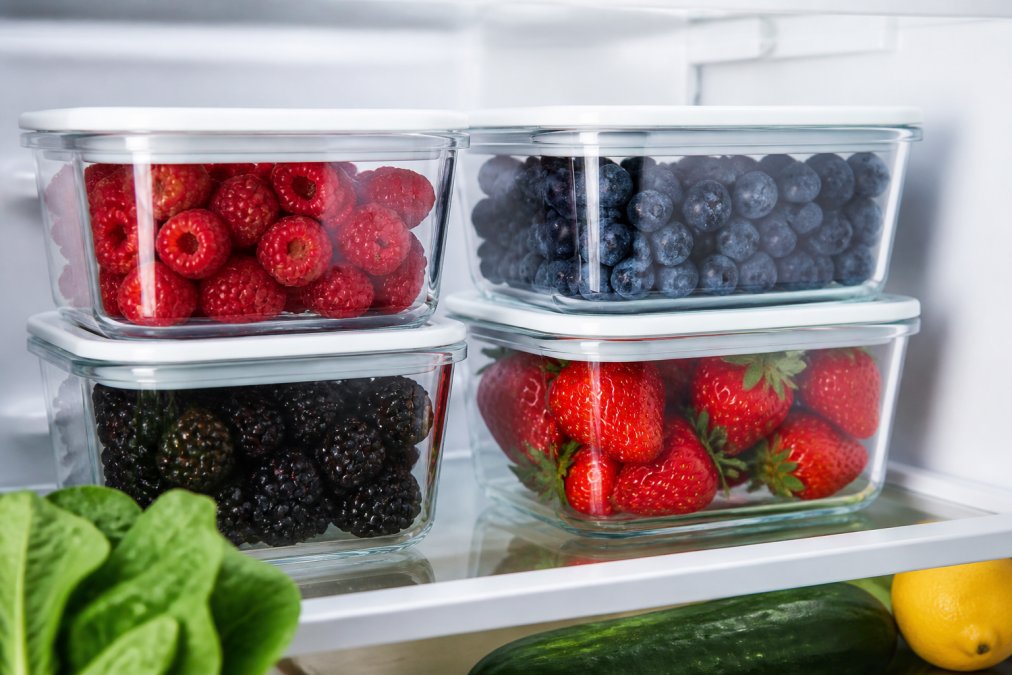
Refrigeration is the baseline for berry storage, but most people do it wrong. Attention to temperature, airflow, and container setup makes a significant difference.
Temperature Settings and the Crisper Drawer
The ideal refrigerator temperature for berries is between 34°F and 38°F. At this range, bacterial growth slows and the berries' natural respiration rate decreases. Most home refrigerators run slightly warmer than their settings suggest, so aim for the lower end.
Many crisper drawers maintain higher humidity than the main shelf, which is counterproductive for berries. If your crisper has humidity control, set it to low. Otherwise, the main shelf near the back, where temperatures are most consistent, is often better.
Single Layer Storage and Paper Towel Technique
Single layer storage is the most underused preservation technique. Stacking berries causes the weight of upper berries to bruise lower ones, creating entry points for mold. Spreading berries in a single layer eliminates compression damage and allows air circulation.
Line your storage container with paper towels before adding berries. They absorb excess humidity and condensation. Check every two days and replace if damp. This habit can add two to three days to shelf life.
Ethylene Gas Sensitivity: What to Keep Away from Berries
Berries are sensitive to ethylene gas, a natural ripening agent produced by apples, bananas, avocados, and tomatoes. Storing berries near these items accelerates ripening and softening. Keep berries on a separate shelf or in a closed container that limits gas exposure. Strawberries are among the most ethylene-sensitive berries.
How Long Do Strawberries Last in the Fridge (And Other Berries)?
Properly stored strawberries last three to seven days in the refrigerator. Blueberries are hardier and can last one to two weeks. Raspberries and blackberries are most delicate, typically lasting two to four days even under ideal conditions.
| Berry Type | Refrigerator (unwashed) | After Vinegar Wash + Dry | Freezer |
|---|---|---|---|
| Strawberries | 3-7 days | Up to 10 days | 6-12 months |
| Blueberries | 7-14 days | Up to 18 days | 6-12 months |
| Raspberries | 2-4 days | 3-5 days | 6-12 months |
| Blackberries | 3-5 days | 4-7 days | 6-12 months |
These ranges assume proper single-layer storage with paper towels and correct refrigerator temperature.
Best Berry Storage Containers: Airtight vs. Breathable
Airtight containers trap humidity, which accelerates mold growth. Breathable containers or airtight containers with the lid slightly ajar allow air circulation that prevents moisture buildup. Paper towel lining compensates by absorbing excess humidity directly.
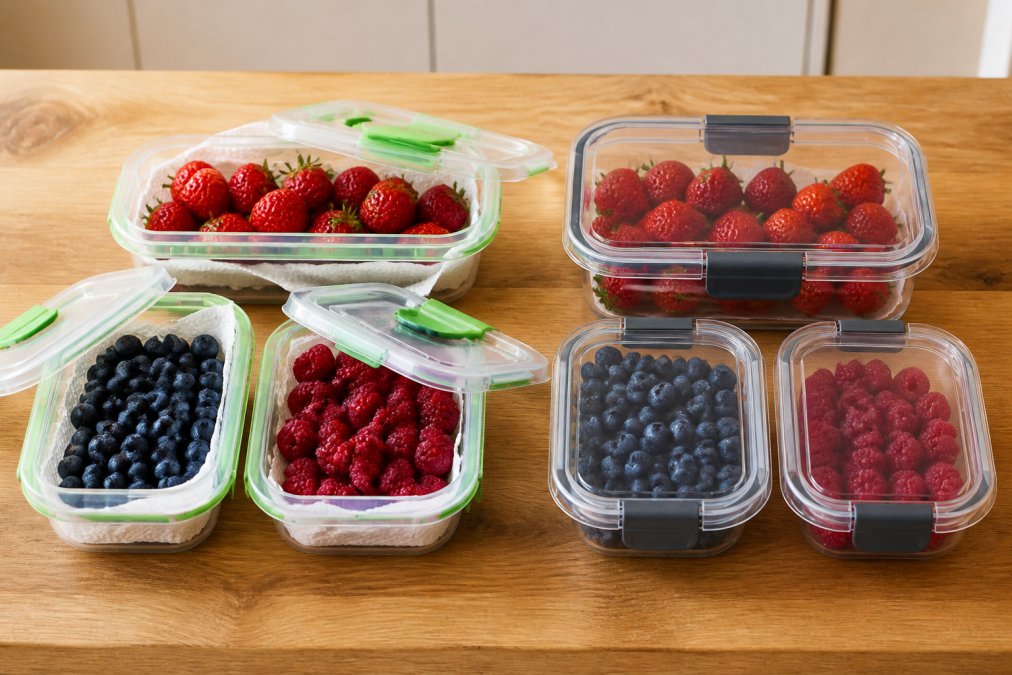
The best setup: a container with a vented lid or a standard container with the lid left slightly open, lined with paper towels.
Sustainable Storage Alternatives Worth Trying
Reusable cloth produce bags made from unbleached cotton allow air circulation while absorbing surface moisture. Beeswax wraps can line container bottoms in place of paper towels and are washable and reusable. Silicone produce keeper containers with built-in drainage trays elevate berries above pooling liquid. The EPA's guidance on reducing household food waste highlights that extending produce shelf life is one of the most impactful ways households can reduce food waste.
Freezing vs. Refrigerating: Which Is Better for Your Berries?
Refrigerating preserves fresh texture and flavor for short-term use. Freezing extends shelf life to six to twelve months but changes the berry's cellular structure. Frozen and thawed berries are softer and release more liquid, making them ideal for smoothies, baked goods, sauces, and jams, but not for eating fresh.
If you'll eat berries within a week, refrigerate them. If you bought more than you can use, freeze the excess immediately rather than waiting for decline. Berries frozen at peak freshness are far better than berries refrigerated past their prime.
To freeze berries correctly:
- Wash and dry berries completely.
- Spread in a single layer on a parchment-lined baking sheet.
- Freeze for two hours until solid.
- Transfer to a freezer-safe bag or container, removing as much air as possible.
- Label with the date and use within twelve months.
How to Keep Berries Fresh Longer: Common Mistakes to Avoid
Most berry storage failures come down to repeatable mistakes.
Washing before storing. Skip the pre-storage rinse unless doing a full vinegar wash with complete drying.
Storing in the original clamshell. Those containers trap moisture and don't allow proper air circulation. Transfer berries to a lined container immediately.
Skipping the paper towel layer. Condensation accumulates in any refrigerated container. Without paper towels to absorb it, moisture sits against berries.
Mixing fresh and older berries. Adding new berries to a container with older ones spreads mold spores. Store new berries separately.
Storing near ethylene producers. Bananas or apples will shorten berry life faster than almost any other factor.
Ignoring one bad berry. A single moldy berry spreads to the entire container within hours. Check daily and remove any showing softening, discoloration, or mold immediately.
Knowing how to keep berries fresh longer is one of the highest-return kitchen skills you can develop. Fresh berries are expensive, and food waste adds up fast. These methods, applied consistently, make a real difference.
Food waste from spoiled produce is frustrating and costly. The right storage containers make the biggest practical difference. Counter and the Cook offers food storage options designed for produce storage, including vented containers and durable lining-friendly designs. Get started with Counter and the Cook and keep your berries and grocery budget in better shape.
Frequently Asked Questions
Q: Should you wash berries before storing them?
A: Skip washing berries until right before you eat them. Rinsing before storage adds moisture that accelerates bacterial growth and mold. The one exception is a vinegar wash: if you dry the berries thoroughly afterward, the diluted acetic acid kills surface mold spores and can meaningfully extend shelf life. The key word is thoroughly, any residual moisture undoes the benefit and speeds up spoilage instead.
Q: Does washing berries in vinegar really work?
A: A vinegar wash for berries genuinely extends freshness when done correctly. Mix one part white vinegar with three parts cold water, soak berries for about 30 seconds, then rinse and dry completely. The acetic acid disrupts mold spores on the berry's surface. Strawberries and raspberries benefit the most. Blueberries, which have a natural protective bloom, see a smaller but still real improvement. Drying is the critical step, skip it and the extra moisture cancels out the gain.
Q: How long do strawberries last in the fridge?
A: Unwashed strawberries stored in a breathable container lined with a dry paper towel typically last 5 to 7 days in the fridge at 32-34°F. After a proper vinegar wash and thorough drying, many people report stretching that to 10 days or more. Blueberries last longer, up to 2 weeks under the same conditions, while raspberries and blackberries are the most perishable, usually lasting only 3 to 5 days regardless of storage method.
Q: What is the best container for storing berries?
A: The best berry storage containers allow some air circulation while protecting against humidity. Vented produce containers or containers with lids left slightly ajar outperform fully sealed airtight containers for most berries, because trapped condensation promotes mold. Line the bottom with a dry paper towel to absorb excess moisture, arrange berries in a single layer if possible, and place them in the coldest part of the fridge, not the door. Replace the paper towel every couple of days to maintain dryness.
This article was written using GrandRanker
Frequently Asked Questions
Q: Should you wash berries before storing them?
A: Skip washing berries until right before you eat them. Rinsing before storage adds moisture that accelerates bacterial growth and mold. The one exception is a vinegar wash: if you dry the berries thoroughly afterward, the diluted acetic acid kills surface mold spores and can meaningfully extend shelf life. The key word is thoroughly — any residual moisture undoes the benefit and speeds up spoilage instead.
Q: Does washing berries in vinegar really work?
A: A vinegar wash for berries genuinely extends freshness when done correctly. Mix one part white vinegar with three parts cold water, soak berries for about 30 seconds, then rinse and dry completely. The acetic acid disrupts mold spores on the berry's surface. Strawberries and raspberries benefit the most. Blueberries, which have a natural protective bloom, see a smaller but still real improvement. Drying is the critical step — skip it and the extra moisture cancels out the gain.
Q: How long do strawberries last in the fridge?
A: Unwashed strawberries stored in a breathable container lined with a dry paper towel typically last 5 to 7 days in the fridge at 32–34°F. After a proper vinegar wash and thorough drying, many people report stretching that to 10 days or more. Blueberries last longer — up to 2 weeks under the same conditions — while raspberries and blackberries are the most perishable, usually lasting only 3 to 5 days regardless of storage method.
Q: What is the best container for storing berries?
A: The best berry storage containers allow some air circulation while protecting against humidity. Vented produce containers or containers with lids left slightly ajar outperform fully sealed airtight containers for most berries, because trapped condensation promotes mold. Line the bottom with a dry paper towel to absorb excess moisture, arrange berries in a single layer if possible, and place them in the coldest part of the fridge — not the door. Replace the paper towel every couple of days to maintain dryness.